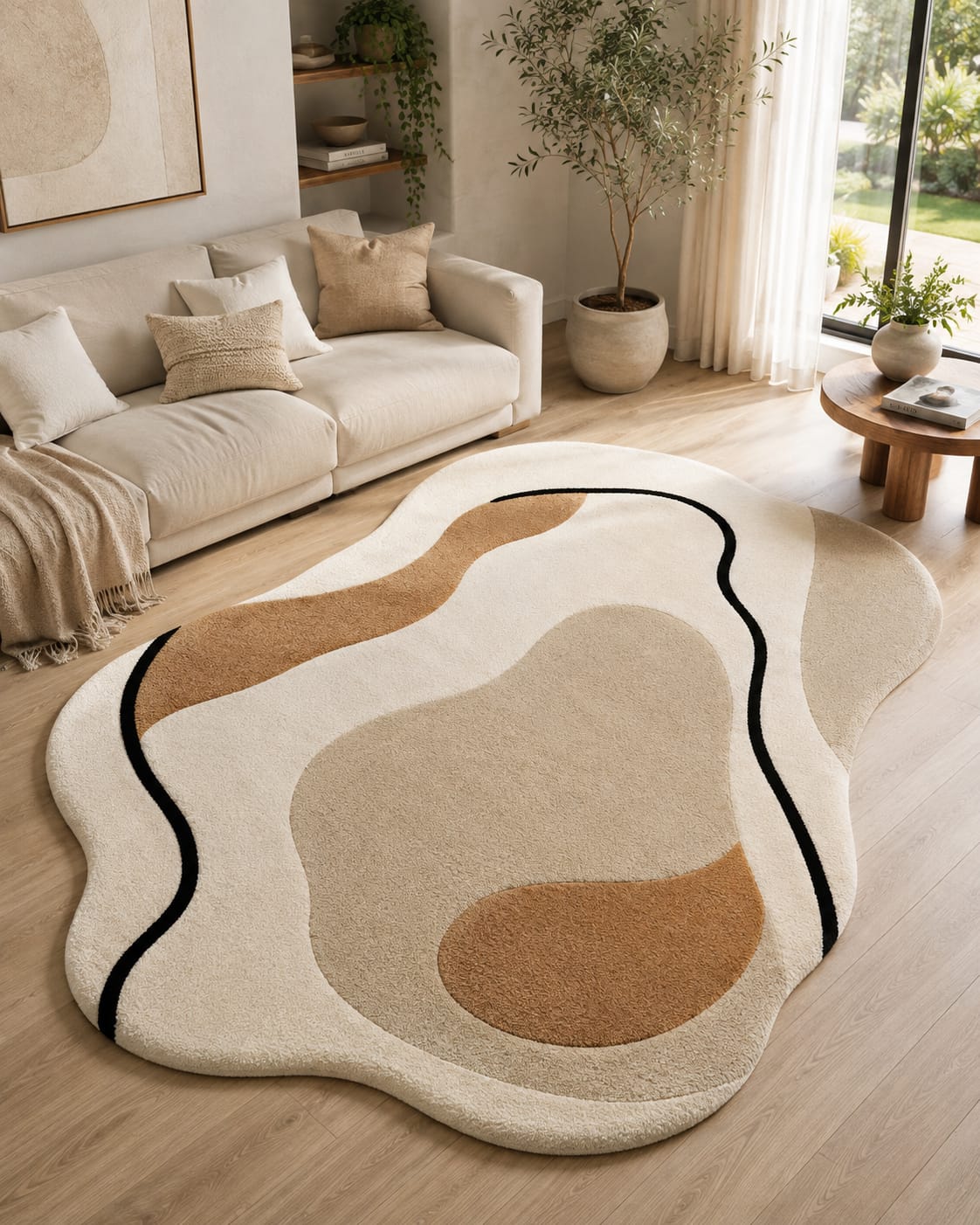
Every Zora Carpet takes 3 to 5 days to complete. Not because we are slow � but because genuine quality cannot be rushed. This is the story of the hands behind our carpets, a craft tradition that has survived industrialisation and continues to thrive in India's weaving heartlands.
What Is Hand-Tufting?
Hand-tufting is a method of carpet-making that sits between traditional hand-knotting and machine production � but shares far more in common with the former. Using a tufting gun, the artisan drives yarn through a stretched canvas backing, loop by loop, following a design drawn directly on the canvas. The result is a pile structure of remarkable consistency and depth.
Unlike a machine-made carpet � which is produced in minutes on a power loom � a hand-tufted carpet requires a skilled craftsperson to guide every pass. The density, pile height, and yarn tension are all managed by human hands. This is why two rugs of the same design can have subtly different textures: each one is the work of a different person, on a different day, in a slightly different mood.
The Tufting Process, Step by Step
1. Design & Transfer
Every carpet begins as a drawing � either a pattern passed down through generations or a new design from our in-house studio. The design is printed or hand-traced onto a cotton canvas stretched over a vertical frame. This is the "blueprint" the artisan will follow.
2. Yarn Preparation
We source our wool primarily from New Zealand � the finest, most consistent natural fibre for carpet-making in the world. The yarn is dyed in small batches using azo-free dyes, then twisted and set to achieve the exact pile behaviour we want. For our viscose-blend designs, a premium grade imported viscose is added to create the signature silky lustre.
"The quality of a carpet is decided before the first tuft is made � in the choice of yarn."
3. Tufting
This is the heart of the process. The artisan loads the tufting gun with yarn and works across the canvas, driving the yarn into the backing in tight, regular loops. For a standard 6�9 ft carpet, this step alone can take 8�12 hours of focused work across two days. The density � how many tufts per square inch � determines the rug's durability and softness. Our standard is 40 tufts per square inch, which is considered premium grade.
4. Carving & Texturing
Once the tufting is complete, our artisans use shearing machines and hand-carving tools to create the rug's final surface texture. High-pile areas are sculpted, patterns are defined, and the visual depth that makes a Zora Carpet distinctive is created in this step. Carving can take several hours on a complex design.
5. Latex Application & Backing
The back of the canvas is coated in natural latex to lock every tuft in place. A secondary cotton backing is then applied for stability. This is what gives our carpets their lay-flat quality � no edges curling, no puckering, even on hard flooring.
6. Final Washing & Finishing
The completed carpet is washed by hand to remove any residual dyes or processing agents, then dried flat in a ventilated area for 12�24 hours. A final quality inspection is conducted � every carpet is measured, checked for pile consistency, and reviewed for colour accuracy before leaving our workshop.
The People Behind the Craft
Zora Carpet works with artisan families in India's traditional weaving centres. Many of our craftspeople are second- or third-generation weavers � children who grew up watching their parents make carpets and who now continue the tradition with their own hands. We pay wages 35% above local market rates and provide health benefits, because we believe the craft is only worth preserving if the people who practice it can build dignified lives from it.
Why This Matters to You
When you buy a hand-tufted carpet from Zora, you are not just buying a floor covering. You are buying something that a skilled artisan spent days making for you. Something that carries the warmth of human attention in every fibre. A machine cannot replicate that � not at any price � and we believe that difference is felt, even when it is not consciously perceived.
The rug under your feet has a story. We think that is worth knowing.